China is home to more than 20 million Muslims, and halal food is easier to find in East China than many visitors expect. Here is how to eat well and pray comfortably on your trip.
Look for 清真 (qīng zhēn)
The characters 清真 mean "halal" and appear on restaurant signs, packaged food and supermarket shelves. Many halal restaurants are run by Hui or Uyghur Muslim families, serving hand-pulled noodles, lamb skewers, big-plate chicken and breads.
Halal food in Shanghai
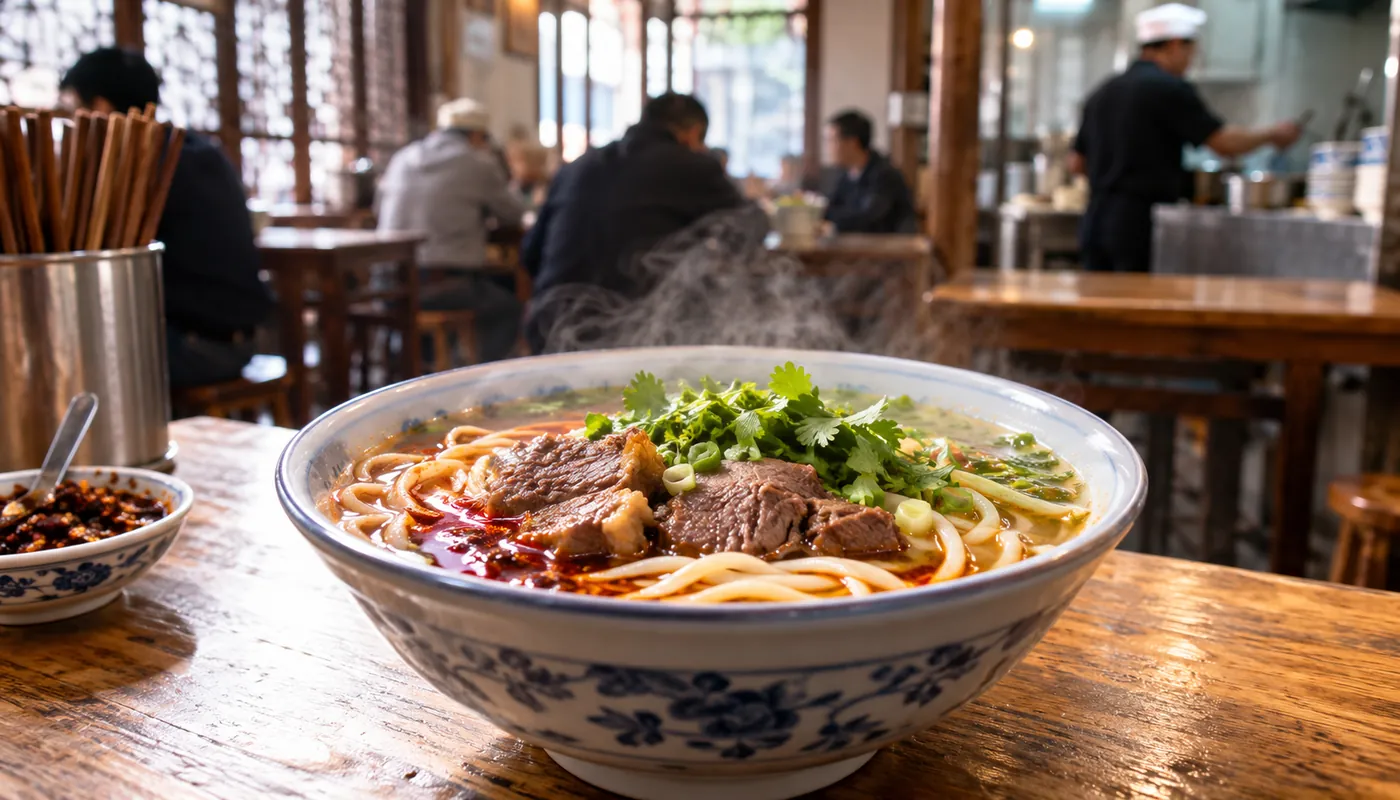
- Lanzhou beef noodle shops are everywhere in the city — reliable, cheap and delicious.
- Xinjiang restaurants serve grilled lamb, polo (pilaf) and laghman noodles.
- Several local breakfast chains offer halal versions of Shanghai classics like fried buns.
Halal food in Hangzhou and Suzhou
Both cities have plenty of Muslim-run noodle shops and Xinjiang restaurants, especially around the train stations and mosques. On our muslim-friendly tours every included meal is at a halal-certified or Muslim-owned restaurant.
Mosques worth visiting
- Xiaotaoyuan Mosque, Shanghai — in the Old City close to Yu Garden.
- Songjiang Mosque, Shanghai — one of the oldest in the region, built in a Chinese temple style.
- Phoenix Mosque, Hangzhou — one of the four great historic mosques of China, near West Lake.
- Jingjue Mosque, Nanjing — a Ming-dynasty mosque near the Confucius Temple.
Prayer and Ramadan travel
Hotels can provide the qibla direction on request, and prayer apps work normally in China. During Ramadan we plan sightseeing around suhoor and iftar, and book restaurants that open early or late.
Frequently asked questions
Is it easy to find halal food without a guide?
Yes in big cities — look for the 清真 sign or use a map app to search "halal" or "清真". Outside city centres it helps to have a guide.
Let a local plan it for you
Tell us your dates and we'll send a free, tailor-made itinerary within 24 hours.